Aging and Hematopoiesis

Aging is not simply the accumulation of years — it is a progressive breakdown of the systems that maintain tissue homeostasis and immune competence. At the center of this breakdown sits the hematopoietic system, which is responsible for continuously replenishing the blood and immune cells that protect the body throughout life. Our research focuses on understanding how hematopoietic stem cells (HSCs) change with age, why those changes drive broad systemic decline, and how they can be reversed.
A defining feature of aged hematopoiesis is myeloid bias: as organisms grow older, HSCs increasingly produce inflammatory myeloid cells at the expense of the lymphoid cells needed for adaptive immunity. This shift contributes to chronic low-grade inflammation, known as inflammaging, as well as diminished immune responses to infection and vaccination, and increased susceptibility to myeloid malignancies. Despite the clear consequences, the molecular drivers of this shift have remained poorly understood.
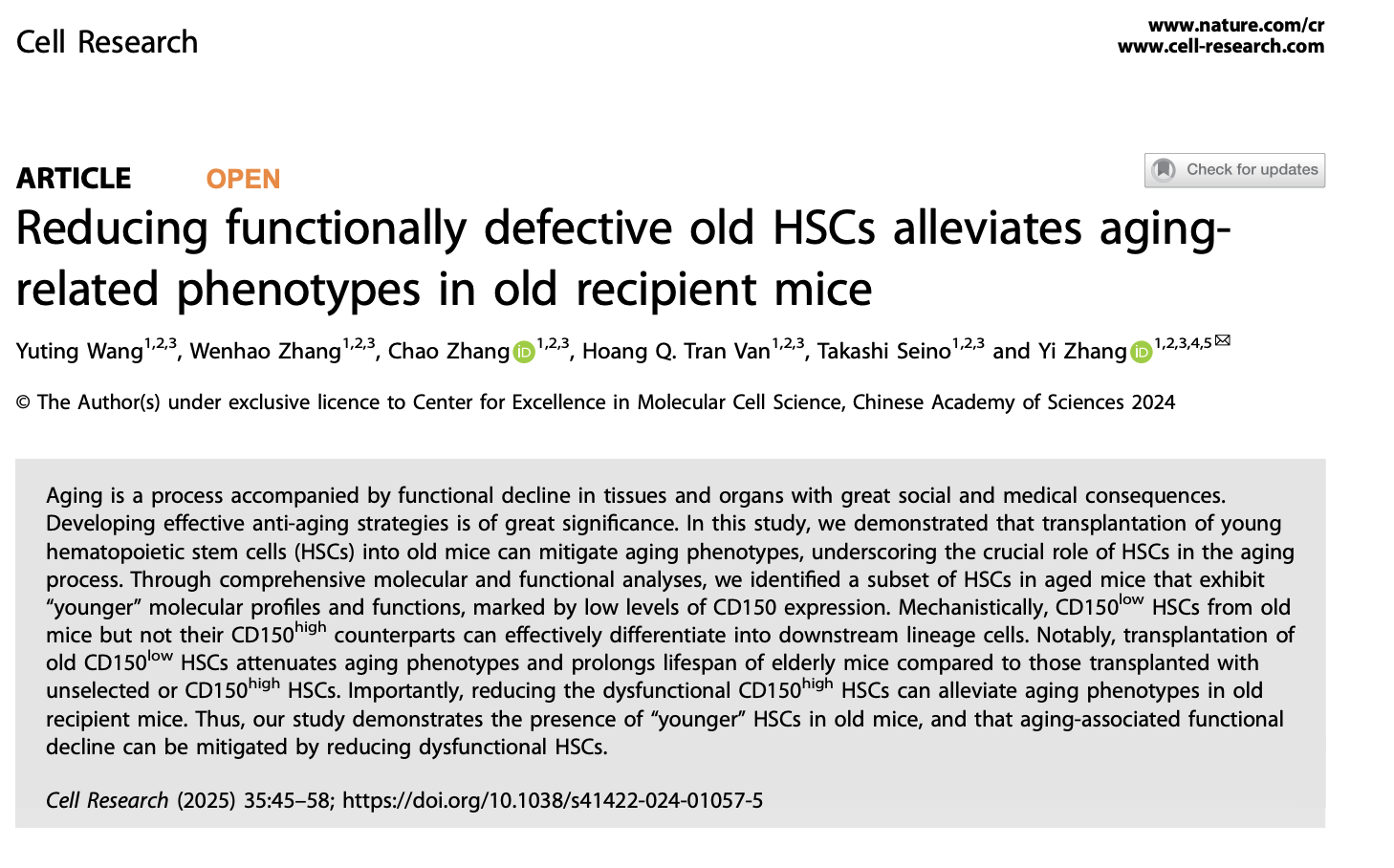
One of our key discoveries is that the aged HSC pool is not uniform. Using comprehensive molecular and functional analyses, we identified a heterogeneous population of HSCs in old mice that includes a functionally "younger" subset marked by low expression of the surface protein CD150, alongside a dysfunctional "older" subset marked by high CD150 expression. The CD150-high population accumulates with age, exhibits an aged transcriptome and epigenome, and is intrinsically biased toward myeloid differentiation. Transplantation experiments demonstrated that selectively transferring CD150-low HSCs from old donors restores balanced hematopoiesis, improves physical and immune function, and extends lifespan in recipient animals. Building on this, we developed an antibody-toxin conjugate approach using a CD150-targeted saporin immunotoxin to selectively deplete dysfunctional CD150-high HSCs in vivo, demonstrating that targeted elimination of these cells alleviates aging-related phenotypes without the need for full bone marrow transplantation.
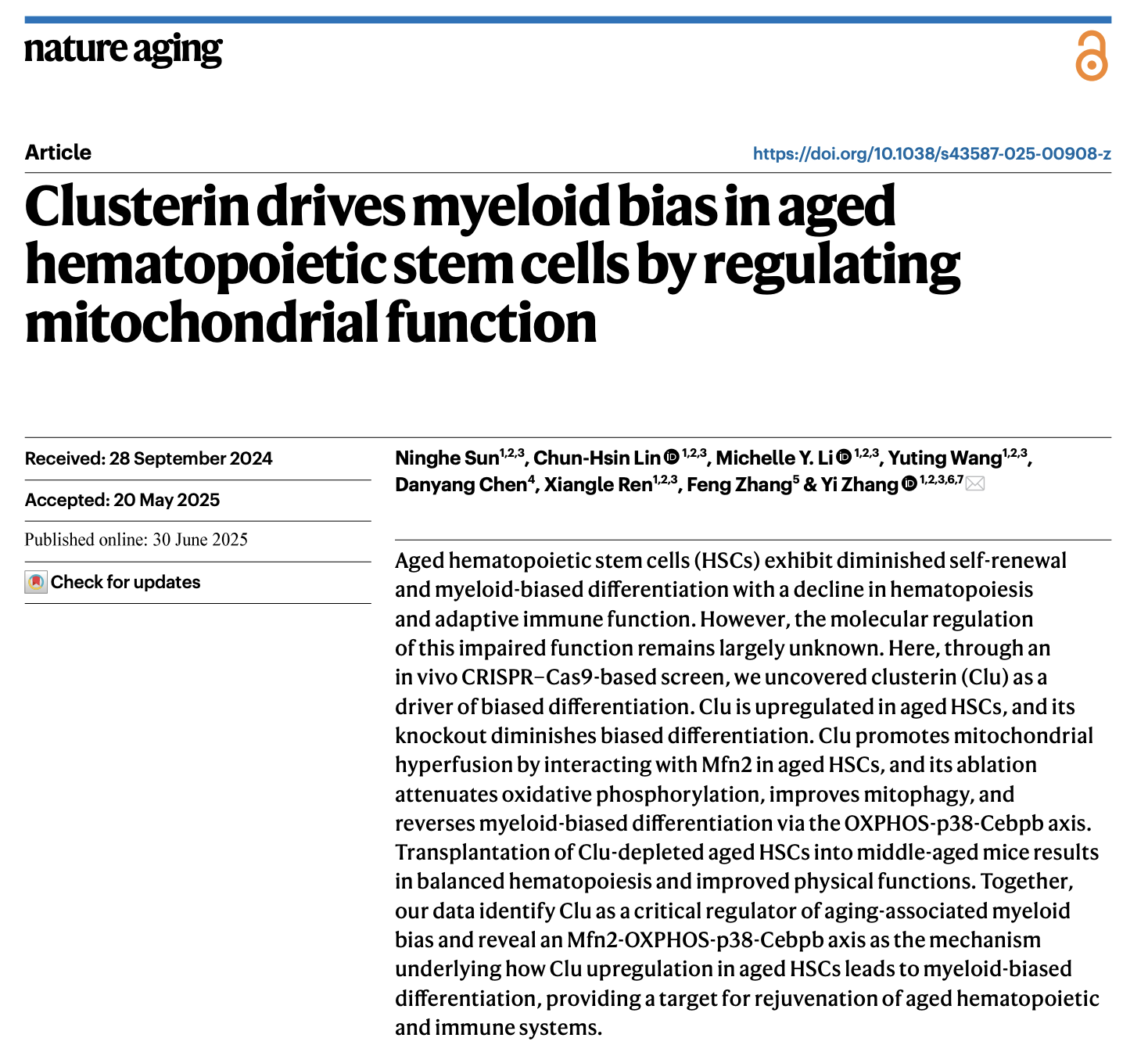
At the molecular level, we identified clusterin as a critical driver of myeloid bias in aged HSCs. Clusterin is upregulated in aged HSCs and promotes mitochondrial hyperfusion by interacting with Mfn2, leading to increased oxidative phosphorylation and activation of a p38-Cebpb signaling axis that enforces myeloid fate. Knockout of clusterin in aged HSCs attenuates this bias, improves mitophagy, and restores balanced differentiation. Transplantation of clusterin-depleted aged HSCs into middle-aged recipients results in healthier hematopoiesis and improved physical function, identifying the Mfn2-OXPHOS-p38-Cebpb pathway as a tractable target for rejuvenating the aged immune system.
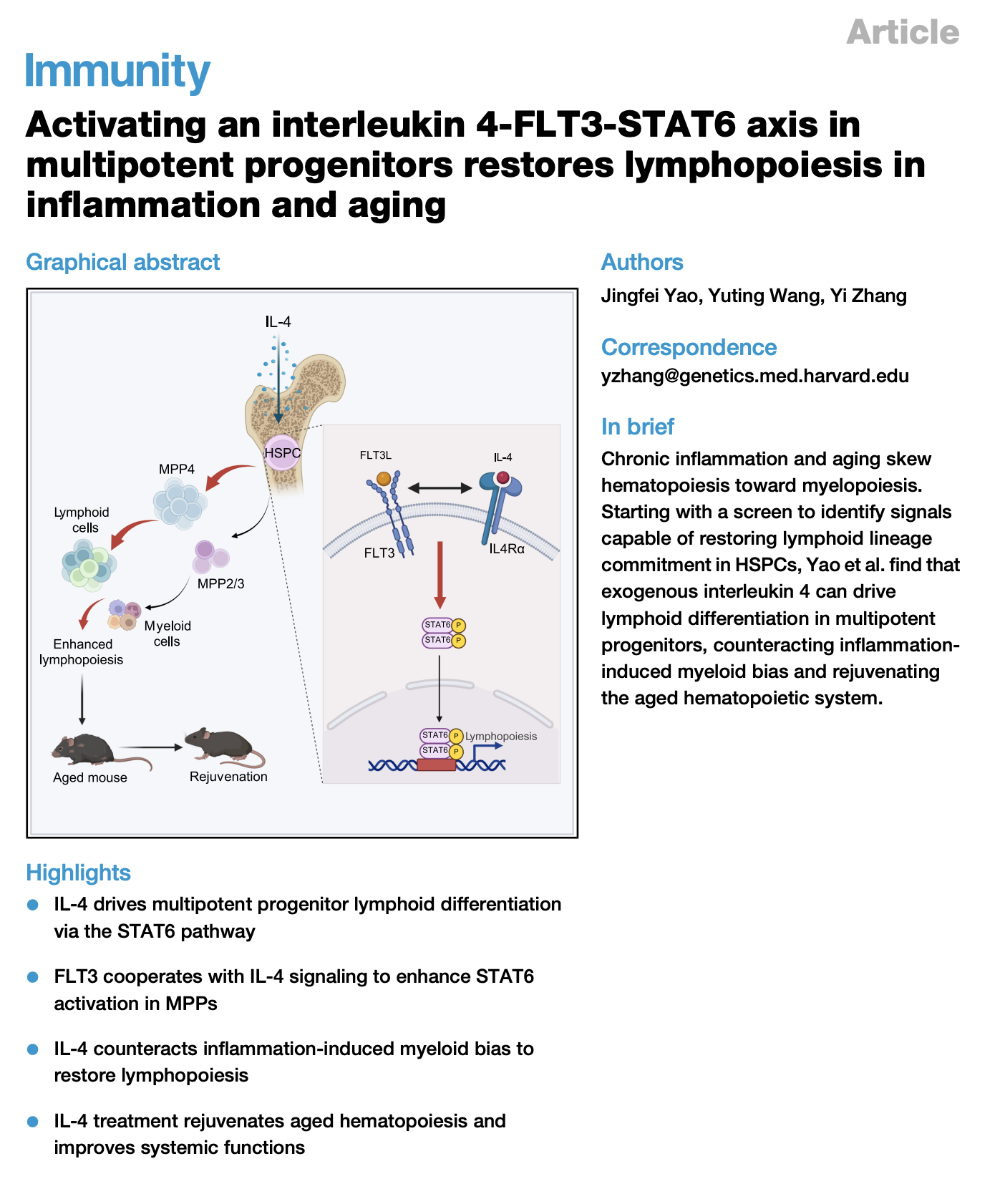
We also discovered that cytokine signaling can redirect aging hematopoiesis from the outside. IL-4, acting through the STAT6 pathway in multipotent progenitors rather than HSCs directly, promotes lymphoid commitment and suppresses myeloid differentiation programs. This effect depends on functional cooperation between IL-4 signaling and FLT3, a receptor tyrosine kinase highly expressed on multipotent progenitors. Treatment with IL-4 rejuvenates aged hematopoietic output, restoring B and T cell production and improving immune, metabolic, cognitive, and physical function in old animals.
Together, these findings reveal that aging-associated hematopoietic dysfunction is both molecularly tractable and reversible, pointing toward multiple therapeutic strategies for restoring immune balance and extending healthspan.
Recent Publications