Aging and Hematopoiesis
Aging reflects a progressive breakdown of tissue homeostasis and immune competence, driven in large part by dysfunction in the hematopoietic system, which continuously replenishes blood and immune cells. Our research examines how hematopoietic stem cells (HSCs) change with age and how these changes can be reversed.
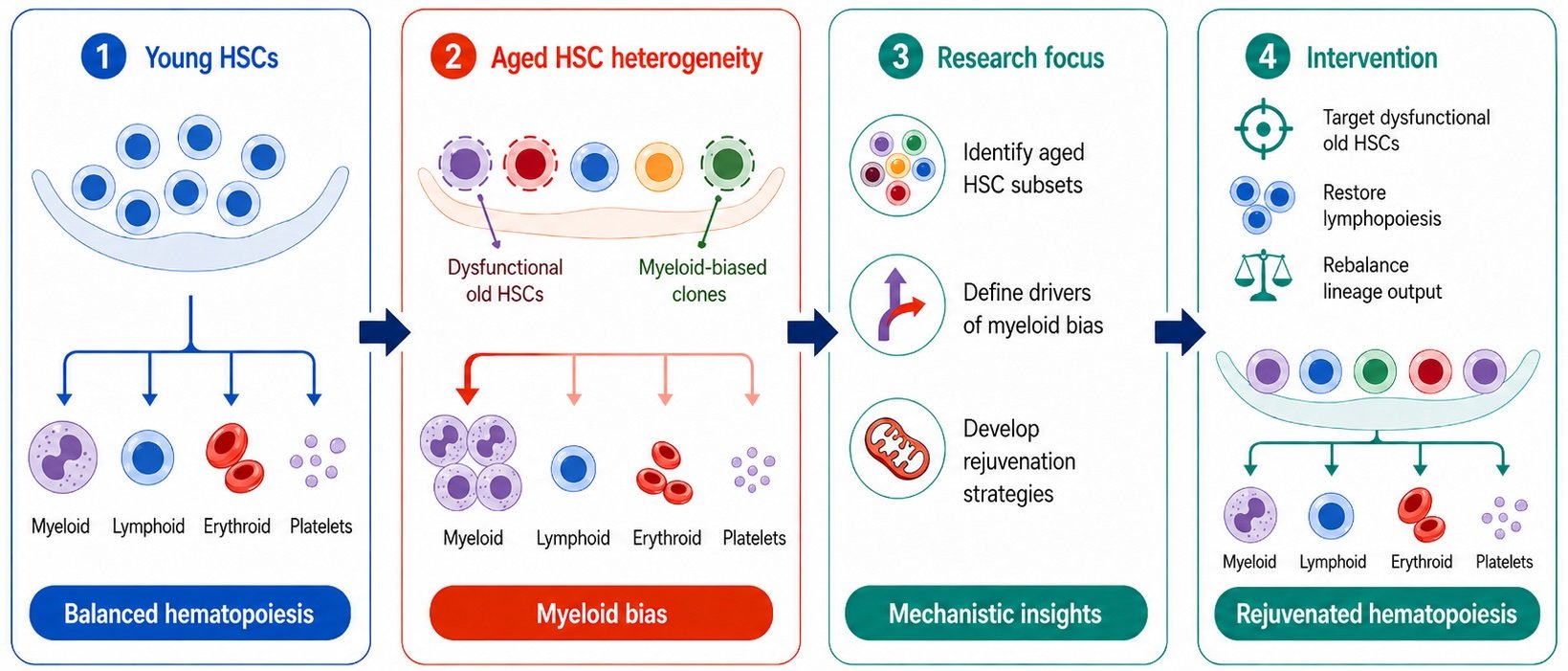
A hallmark of aged hematopoiesis is myeloid bias: HSCs increasingly favor inflammatory myeloid cell production over the lymphoid cells needed for adaptive immunity. This shift drives chronic inflammation ("inflammaging"), weakens immune responses, and raises susceptibility to myeloid malignancies.
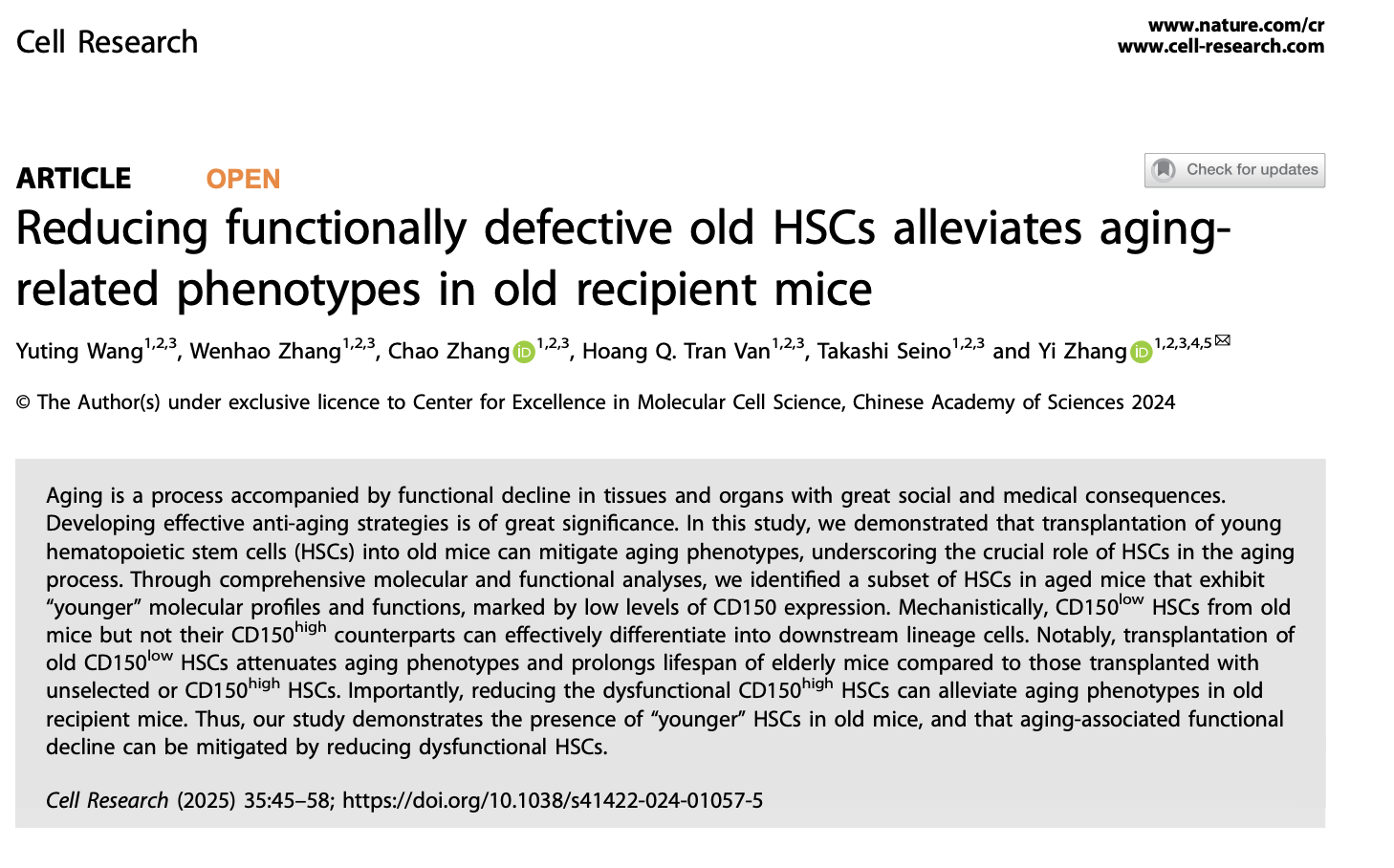
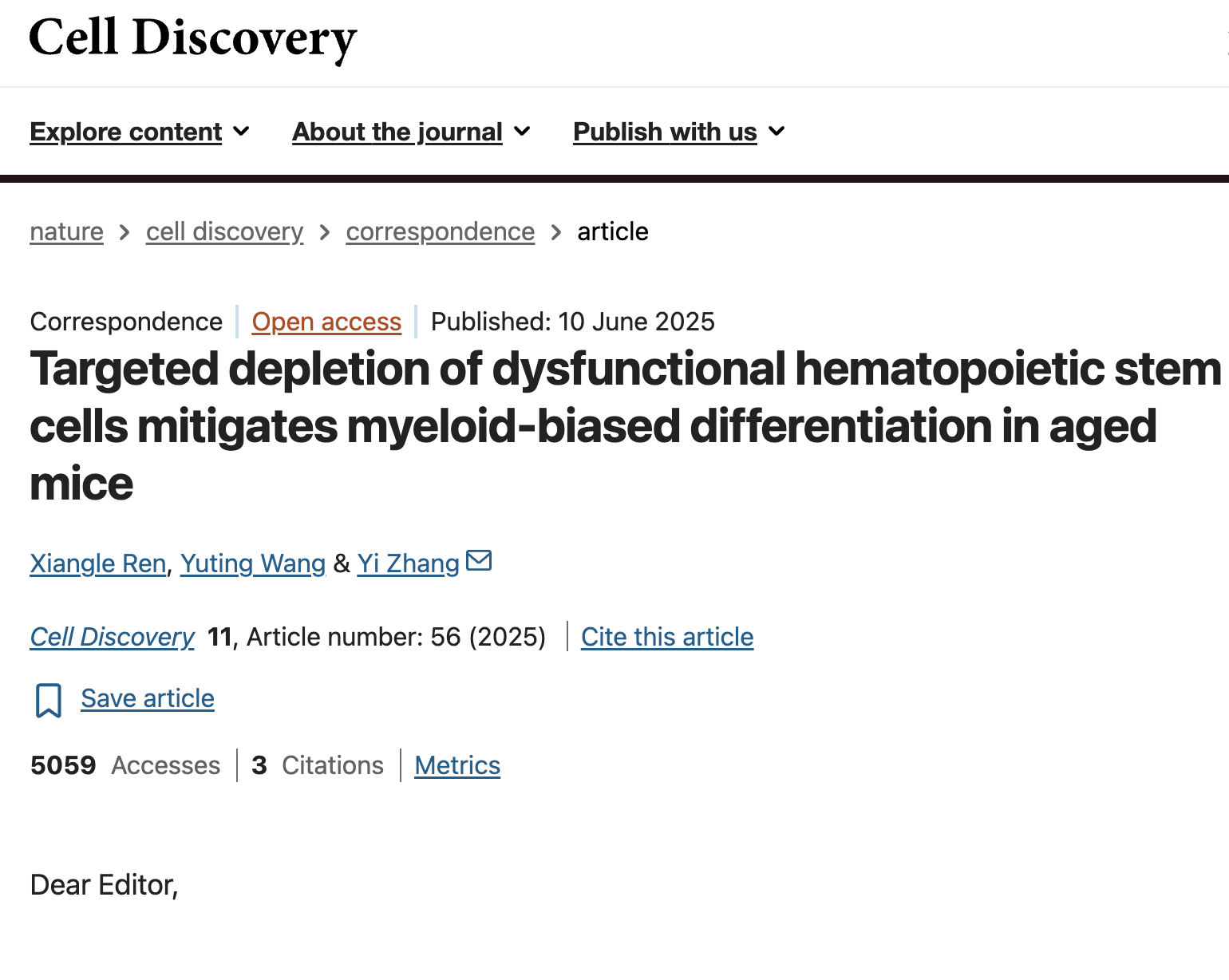
We found that the aged HSC pool is functionally heterogeneous, containing a "younger," CD150-low subset alongside a dysfunctional, myeloid-biased CD150-high subset that accumulates with age. Transplanting CD150-low HSCs from old donors restores balanced hematopoiesis and extends lifespan in recipients. We also developed a CD150-targeted immunotoxin that selectively depletes dysfunctional HSCs in vivo, improving aging phenotypes without full transplantation.
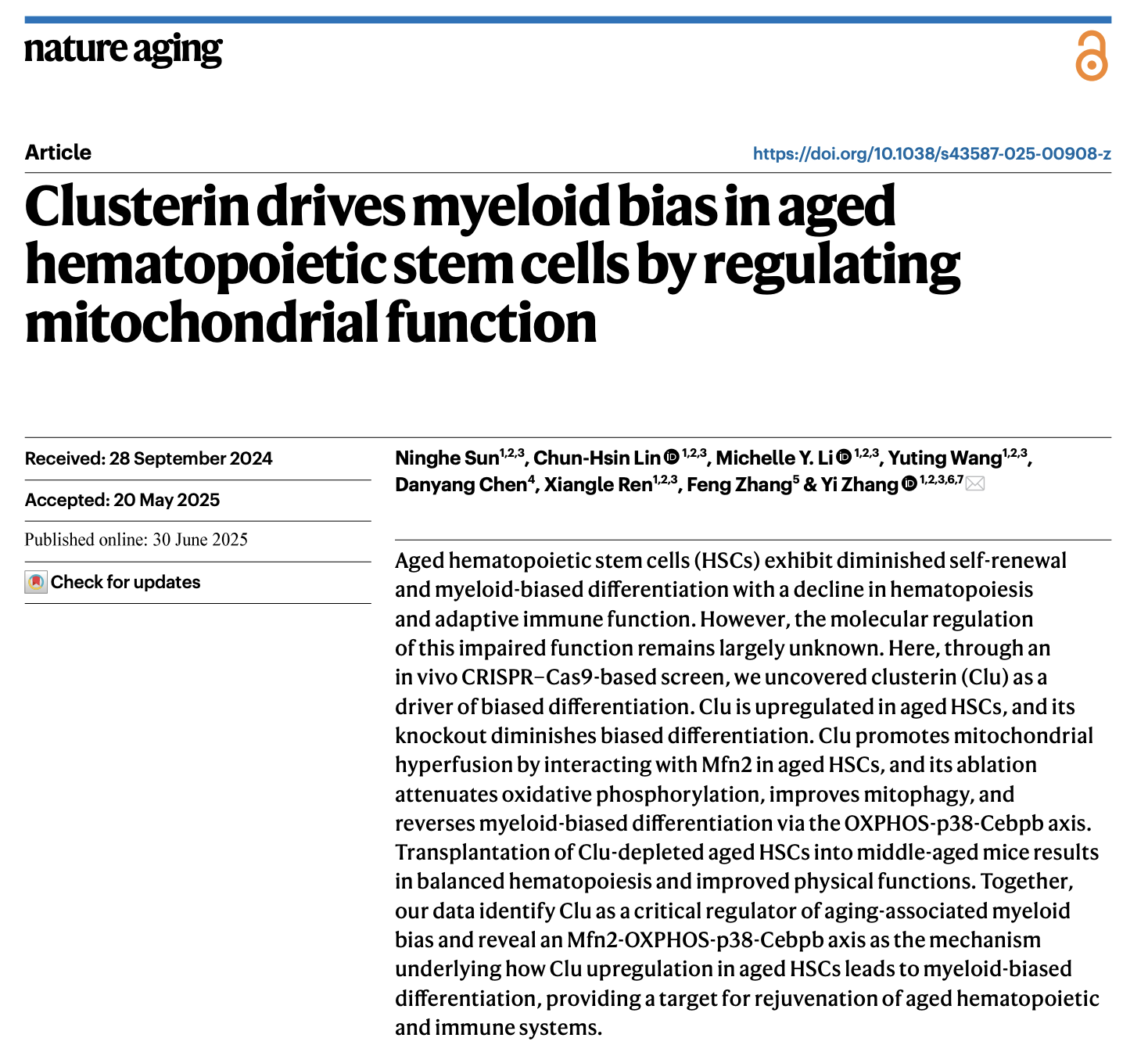
At the molecular level, we identified clusterin as a key driver of myeloid bias: it promotes mitochondrial hyperfusion via Mfn2, increasing oxidative phosphorylation and activating a p38-Cebpb axis that enforces myeloid fate. Depleting clusterin restores balanced differentiation and improves function in recipients of aged HSCs.
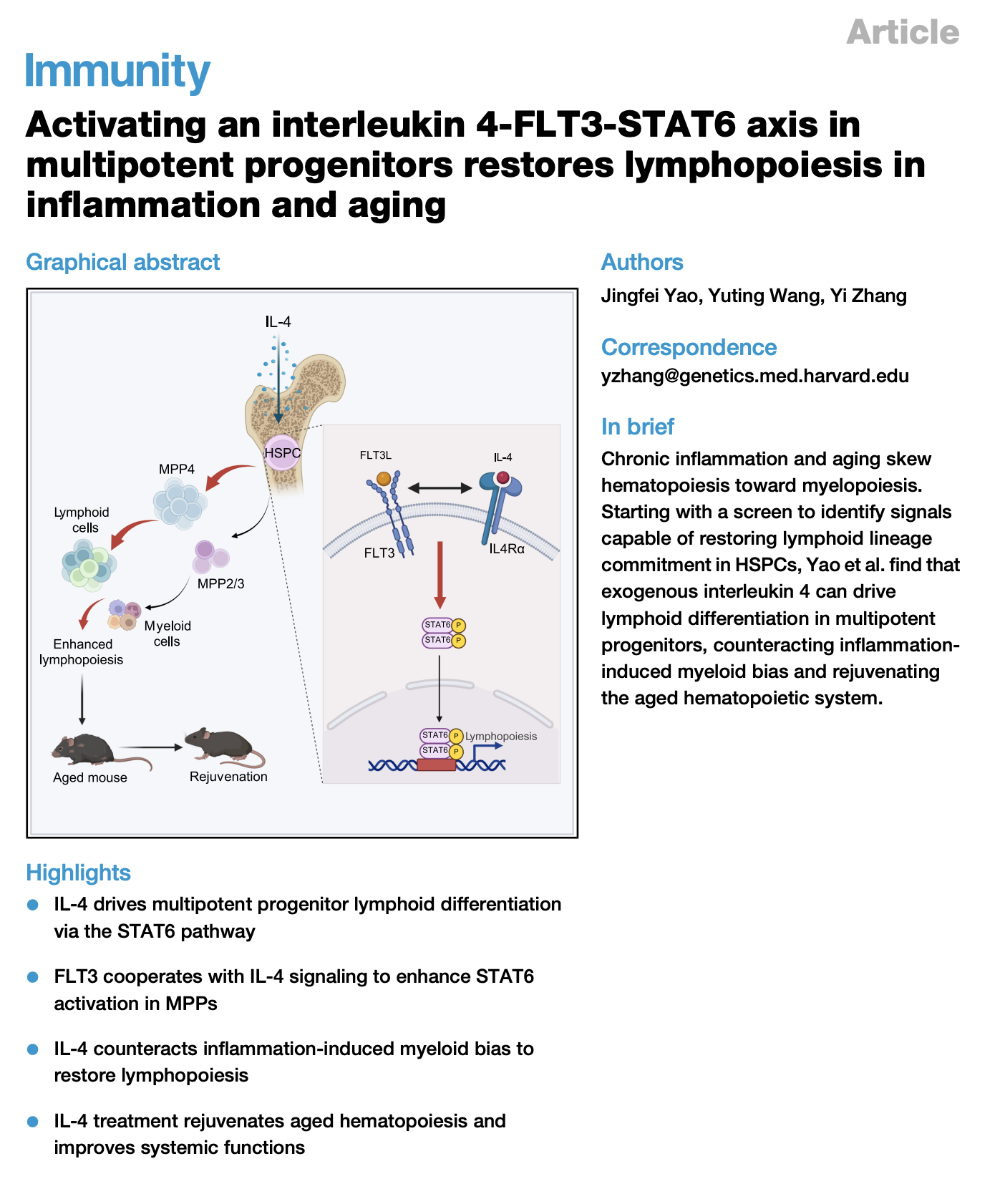
Finally, we showed that IL-4, signaling through STAT6 in multipotent progenitors (dependent on FLT3), promotes lymphoid commitment and rejuvenates aged hematopoietic output, improving immune, metabolic, cognitive, and physical function.
Together, these findings show that hematopoietic aging is molecularly tractable and reversible, revealing multiple paths toward restoring immune balance and extending healthspan.
Recent Publications